Ice maker and ice machine
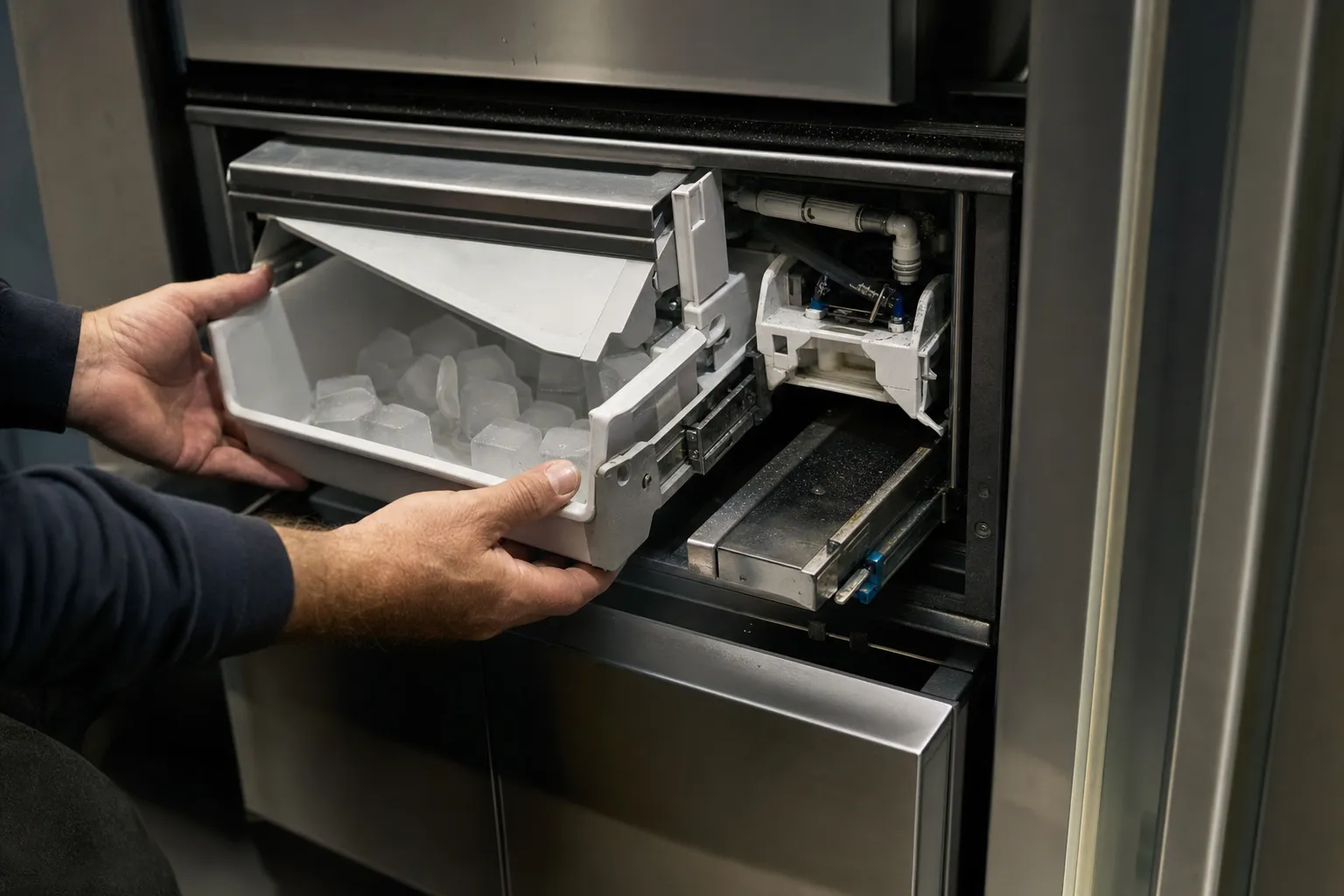
Ice Cubes Fused Into One Block in the Bin
In the owner's words
When I open the drawer the ice is one solid lump, and I have to chip the cubes apart with a spoon.
Short answerCubes fused into a block usually mean ice left unused too long, or ice that softened and refroze. A lump that forms within days of emptying the bin is not normal, and Sub-Zero Appliance Repair Seattle, (206) 339-4211, checks freezer temperature and the fill first.
Signed
- Technician
- Marta Fennimore
- Bench time
- 12 years in the trade
- Title
- Refrigeration technician — ice systems and water supply
- Carries
- EPA 608 certified
- Dated
- Ice bin
- Ice maker
Pattern Ledger
Cubes Fused in the Bin: how it usually goes
- Most often Ice left unused through the freezer's defrost cycles
-
Gives itself away by The bin sat full for a week or more, and fresh cubes land loose on top
Price band none set for this work — quoted after the diagnosis
- Sometimes Freezer running warm, so cubes soften and refreeze
-
Gives itself away by The lump looks glazed, not frosty, and a thermometer reads above 5°F
Price band none set for this work — quoted after the diagnosis
- Rarely Water overflowing from the ice maker into the bin
-
Gives itself away by A flat sheet of clear ice across the bottom of the bin
Price band Ice maker, water valve or supply line$270–$750
Telling these three apart is what the $89 visit is for. Sub-Zero Appliance Repair Seattle · (206) 339-4211
Old ice, warm ice or extra water
The shape of the lump separates three causes before anything is opened. Old ice fuses cube to cube through the freezer’s defrost cycles, and the giveaway is that fresh cubes land loose on top of a solid base. Ice in a freezer that has drifted warm softens at the surface and sets again into a glazed mass with no frost on it. Water spilling from the ice maker leaves something different from either: a flat, clear sheet across the bottom of the bin with the cubes set into it.
What we usually find
Where the ice is used daily, a block is rarely just age, so the freezer itself comes first: what a thermometer says against what the display says, whether the door seal has a gap, and how long the compartment takes to come back after a big opening.
Then the fill. An ice maker should take its water, stop cleanly and release the cubes; a supply that sags or a valve that closes slowly lets a fill run over the mold, and that is the version that returns within days of the bin being emptied rather than after two weeks of standing.
What you can check safely
- Switch the ice maker off, then empty, rinse and dry the bin; Sub-Zero suggests this once or twice a month.
- Check the freezer is set to 0°F and a thermometer agrees.
- Run a hand along the freezer gasket for tears or anything holding it open.
- Take ice from the bin every few days to keep the cubes loose.
Owner checks end there. Sealed tubing, wiring behind the grille and anything held by screws belongs on a service call — Sub-Zero Appliance Repair Seattle, (206) 339-4211.
Questions owners ask about this
Why does ice fuse when the freezer never feels warm?
A frost-free freezer runs regular defrost cycles, and Sub-Zero says unused ice fuses over a few days because of them. Using the ice keeps the cubes loose. Only a block that forms quickly, or returns soon after the bin is emptied, points to a fault.
Could the block be a leak rather than old ice?
Yes. A flat, clear sheet across the bottom of the bin suggests water spilling from the ice maker; Sub-Zero lists a jammed cube, a faulty valve, a wrong fill setting and low pressure. Sub-Zero Appliance Repair Seattle, (206) 339-4211, traces which one applies.
Should I break the block up with a knife?
Better not. Switch the ice maker off, lift the bin out and let the block loosen in the sink before refitting the bin level and fully home. A knife can crack the bin or damage the ice maker above it.