Ice Maker Repair
Sub-Zero Ice Maker Making Hollow or Cloudy Cubes
Hollow, small or cloudy cubes from a Sub-Zero clear-ice maker are usually a water supply problem, not a failed module. How to tell the difference before paying for the wrong part.
Reported by
Dean Halvorsen
Refrigeration technician — sealed systems and airflow · 19 years in the trade
- EPA 608 certified
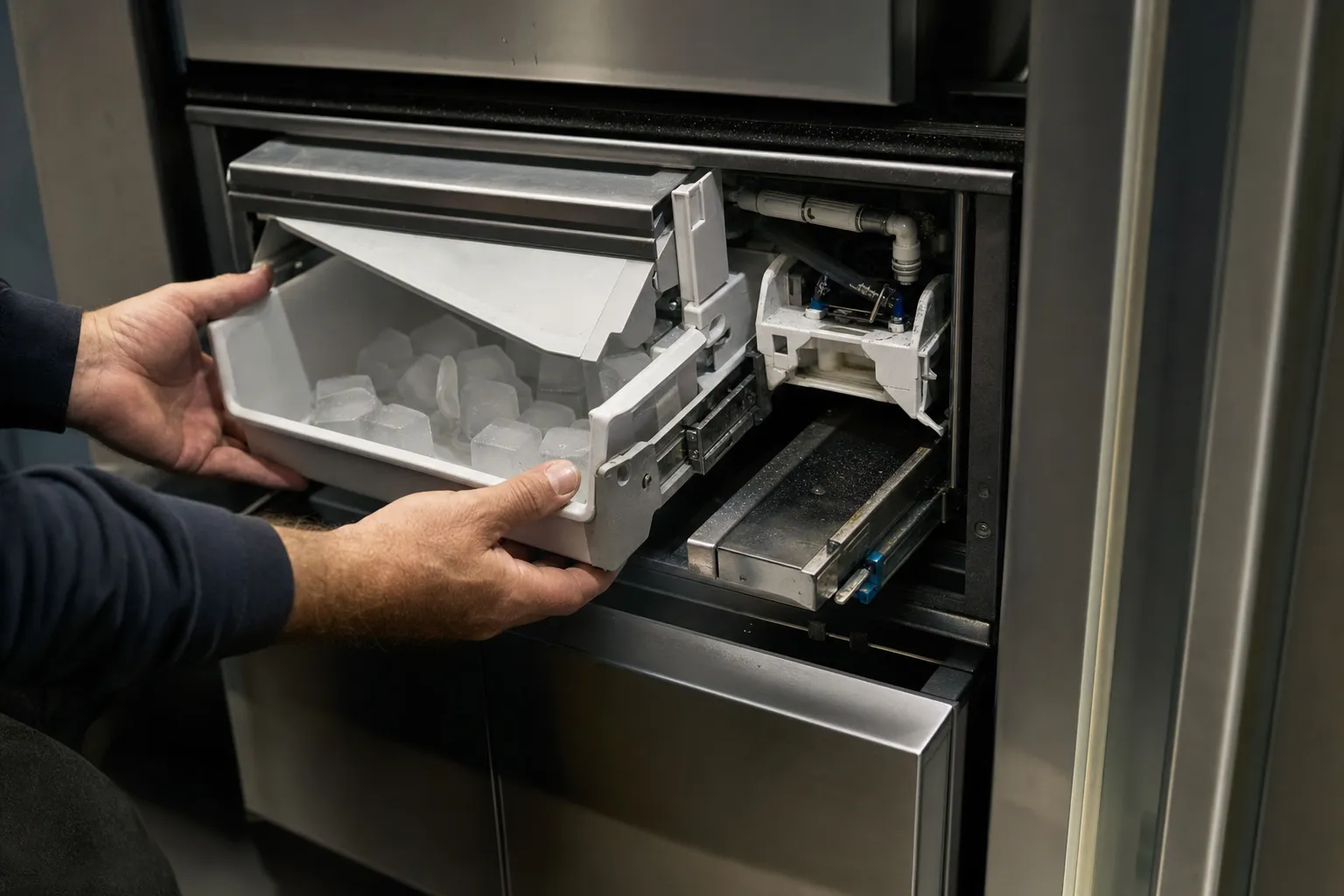
Hollow cubes, undersized cubes and cloudy ice all get diagnosed as “the ice maker is dead” far more often than they should be. On a Sub-Zero the ice-making module seldom turns out to be the culprit. The water on its way to the mold is where we usually find the trouble.
What hollow cubes are telling you
A hollow or shell-like cube means the mold did not receive enough water during the fill cycle, froze what it had from the outside in, and harvested early. The harvest mechanism is working — you have cubes. The fill is short.
That points at everything upstream of the mold:
- a partially clogged water filter, by far the most common cause
- a failing water inlet valve that no longer opens fully
- a restricted or kinked supply line, often behind the unit after it has been pushed back into the cabinet
- low household water pressure, which on some Seattle homes with older plumbing is a genuine factor
None of those are the ice maker module. Swapping the module here is the costly wrong turn: a brand-new one starved of water turns out exactly the same thin, hollow shells as the old one did.
Cloudy versus hollow: different problems
It is worth separating the two symptoms, because they rarely share a cause.
Cloudy ice is an appearance problem. Dissolved minerals and trapped air make the cube opaque. It is a water quality issue and often improves with a fresh filter. Sub-Zero’s clear-ice systems freeze slowly and from one direction specifically to push air and minerals out, so when clarity degrades the water is usually the variable that changed.
Hollow ice is a volume problem, as above. A cube can be perfectly clear and still be hollow.
Small but solid cubes sit between the two and usually mean a mild restriction — enough to shorten the fill, not enough to hollow the cube.
What to try before booking a visit
Change the water filter, and note the date. This is the single highest-yield thing you can do, it costs very little, and filters are routinely left in far past their service life. Then give the unit a full 24 hours before judging the result — you are waiting on a complete production cycle, not a single harvest.
While you are there, check that the supply line behind the unit is not kinked. On built-ins that have been pulled out for cleaning or a previous repair, a crushed line at the back is not unusual.
If the cubes are still hollow after a fresh filter and a full day, the fault is downstream of the filter and it is a service call — most likely the inlet valve.
When it really is the module
There are symptoms that do point at the ice maker itself, and they look different from anything above: no harvest at all despite a full mold of ice, cubes fused into a solid block, the ejector arm stalled mid-sweep, or water dispensing into the bin instead of the mold.
Those are module and harvest-mechanism faults, and they are a genuine part replacement. The reason the distinction is worth caring about is cost — a valve and a module are not the same repair, and a shop that reaches for the module every time is charging you for the more expensive guess.
Questions that come up next
My bin never seems to fill. How do I know if that is slow?
There is no single figure, because output depends on the model and on how much ice the household takes. A bin that stays well short of full for several days, with good water pressure at the tap, points to a restriction in the supply rather than a failed module.
Will a fresh filter clear up cloudy ice?
It can. Cloudiness comes from air and dissolved minerals, and a new cartridge sometimes helps. Hollow cubes are a different matter: they come from too little water reaching the mold, and a filter change on its own will not put that right.